3 / 10
The sand breach
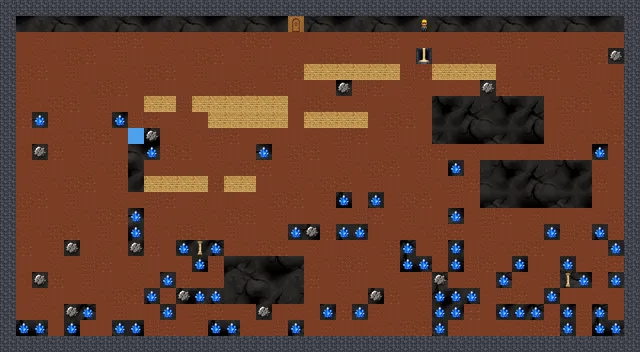
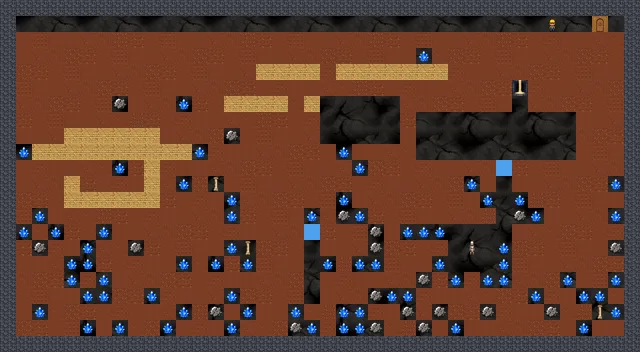
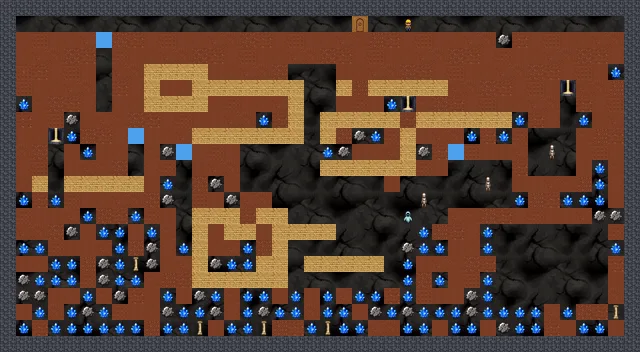
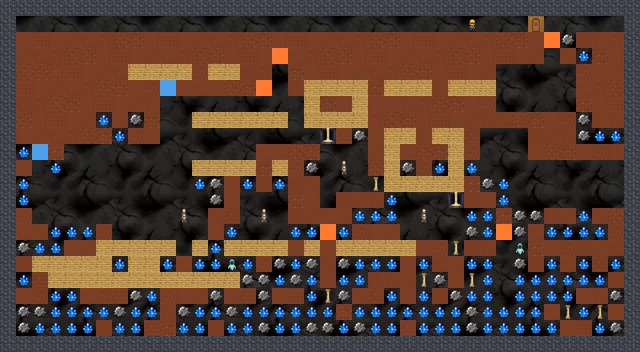
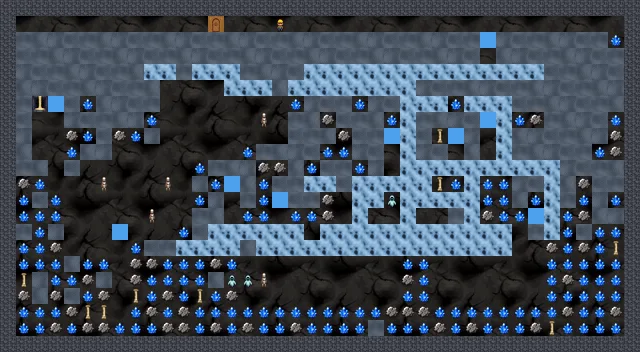
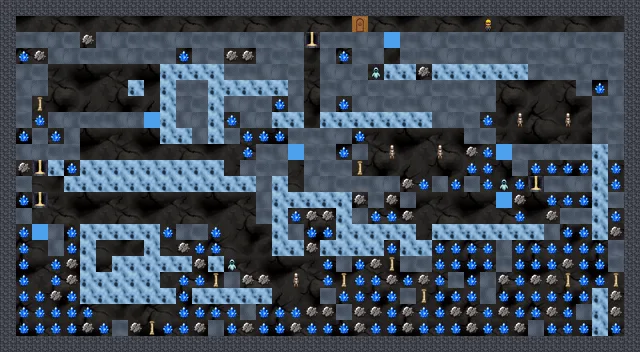
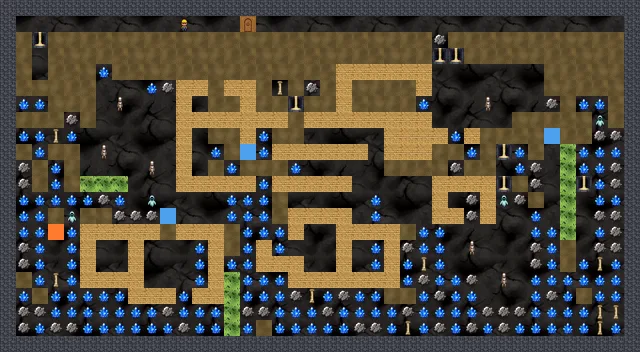
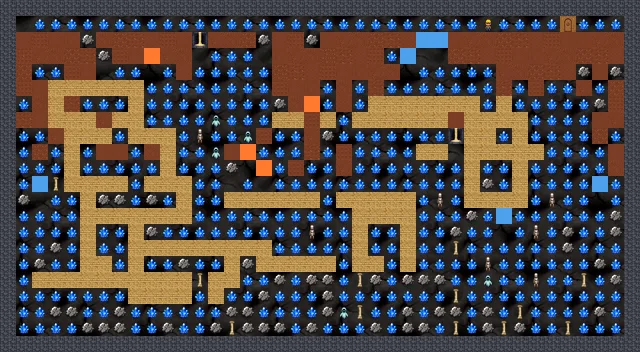
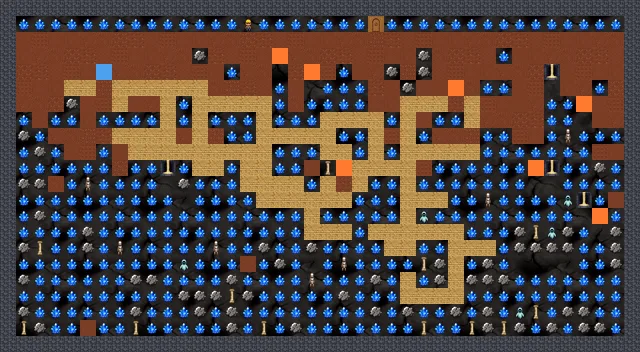
A crack in the wall of this tomb, and it is pouring. Sand comes out of the breach on a fixed beat, falls down the shaft and piles up on the floor; it does not spread sideways like water, it slumps and stacks, and a grain that lands on your head finishes you. The shaft is the danger. Dig into it and you are standing at the bottom of a chimney with a continuous supply above you. The rest of the cave is ordinary digging, which is the point: this level is about learning where the ceiling is dangerous rather than where the floor is. Watch where the sand falls, keep the shaft in sight while you work, and when the pile reaches you, move. Sand only ever kills the person who digs under it.
Tip: Never dig straight down from a breach — take the shaft from the side.
The cave in numbers
- Gems to open the exit
- 50 of 99
- Clock
- 168 seconds
- Size
- 38 × 20
- Mummies and ghosts
- 4
Hazards in this cave
Boulders
They sit still until something moves them, then they fall, and they keep falling until they hit something. A boulder you dig under is a boulder you have to run from.
Sand
Sand comes out of a breach on a beat, falls down the shaft and piles up on the floor. It does not spread sideways like water, it slumps and stacks. Sand that lands on your head finishes you, so never dig straight down under a breach.
Water
Water pours out of a spring, falls into the basin and spreads sideways until it finds its level. It drowns the ground you are standing on rather than hitting you. Water spreads into empty space only, so dig early and it fills the hole you made instead of the one you were planning.
Lava
Lava creeps at half the speed of water and burns from a cell away. Where lava meets water both flash-freeze into obsidian: solid rock that nothing can dig through and nothing can move. Lava does not drown you, it burns you, one heart a second, with no window to duck in.